
Introduction
Most car owners think scratches are the biggest threat to their vehicle’s paint. In reality, the damage often starts long before a visible scratch appears. Daily exposure to UV rays, road debris, bird droppings, tree sap, industrial fallout, and improper washing gradually weakens the clear coat.
This is where Paint Protection Film (PPF) comes into the picture. Rather than repairing paint damage after it happens, PPF is designed to prevent it in the first place.
In this guide, you’ll learn how Paint Protection Film works, what it can and cannot protect against, how it compares with other paint protection options, and whether it’s worth installing on your vehicle.
What is Paint Protection Film?
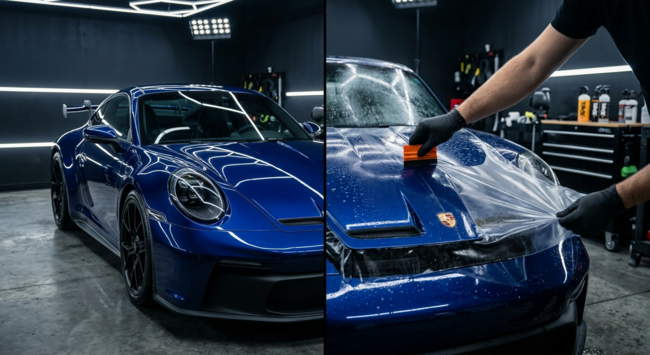
Paint Protection Film (PPF) is a transparent polyurethane film applied over a vehicle’s painted surfaces. Modern PPF is manufactured using Thermoplastic Polyurethane (TPU), a flexible material that absorbs minor impacts while maintaining optical clarity.
Unlike waxes or ceramic coatings, Paint Protection Film acts as a physical barrier between the paint and external hazards.
Its primary purpose is to reduce paint damage caused by:
- Stone chips
- Road debris
- Minor scratches
- Insect acids
- Bird droppings
- Tree sap
- UV exposure
- Environmental contaminants
Because the original paint remains protected underneath, the vehicle often maintains a newer appearance for longer.
How Does Paint Protection Film Actually Work?
Many people assume PPF is simply a plastic sticker. In reality, modern Paint Protection Film consists of multiple engineered layers.
These layers typically include:
- A stain-resistant top coat
- Self-healing elastomer layer
- High-performance TPU layer
- Pressure-sensitive adhesive
- Protective release liner
When small scratches occur on the surface, the elastomer layer can gradually return to its original shape through heat from sunlight or warm water. This is why many premium films are described as self-healing.
What Can Paint Protection Film Protect Against?
Although no product makes a car indestructible, Paint Protection Film significantly reduces damage caused by everyday driving.
It is especially effective against:
- Flying stones on highways
- Door edge scratches
- Light parking abrasions
- Sand and road grit
- Chemical stains
- Oxidation
- Paint fading
- Swirl marks from washing
However, it is important to understand that PPF is not designed to prevent major collision damage or deep impacts.
Areas of a Car That Benefit Most From PPF
Some parts of a vehicle experience far more abuse than others.
The most commonly protected areas include:
- Front bumper
- Bonnet (hood)
- Front fenders
- Side mirrors
- Headlights
- Door cups
- Door edges
- Rear bumper loading area
- A-pillars
- Rocker panels
Owners looking for maximum protection often choose full-body coverage.
Paint Protection Film vs Ceramic Coating
One of the most common questions is whether PPF is better than ceramic coating.
The answer depends on the type of protection you need.
| Paint Protection Film | Ceramic Coating |
|---|---|
| Physical protection | Chemical protection |
| Protects against stone chips | Does not stop stone chips |
| Self-healing options available | No self-healing |
| Thick TPU layer | Thin liquid coating |
| Prevents paint damage | Makes cleaning easier |
Many car owners combine both by applying a PPF Coating over the Paint Protection Film for improved hydrophobic performance and easier maintenance.
(Natural internal link: PPF Coating)
Is Paint Protection Film Worth It?
Whether PPF is worth the investment depends on how you use your vehicle.
It makes the most sense if you:
- Drive frequently on highways
- Own a new vehicle
- Plan to keep the car for several years
- Want to maintain resale value
- Own a premium or luxury vehicle
- Live in areas with harsh weather conditions
For older vehicles with heavily damaged paint, paint correction may be necessary before installation.
Common Myths About Paint Protection Film
Myth 1: PPF makes the paint look dull.
Modern TPU films are designed with high optical clarity and often enhance the paint’s gloss.
Myth 2: PPF never needs maintenance.
Although durable, it still benefits from regular washing and proper care.
Myth 3: All Paint Protection Films are the same.
Different manufacturers use different TPU materials, adhesives, top coats, and warranties.
Myth 4: PPF is only for luxury cars.
Today, many owners of hatchbacks, sedans, SUVs, and EVs install PPF to protect their investment.
How to Maintain Paint Protection Film
Proper maintenance extends the life of the film.
Recommended practices include:
- Wash using a pH-neutral shampoo.
- Avoid abrasive polishing compounds.
- Remove bird droppings promptly.
- Use clean microfibre towels.
- Avoid automatic brush car washes.
- Inspect edges periodically.
Good maintenance helps preserve clarity, gloss, and self-healing performance.
Choosing the Right Paint Protection Film
Before selecting a Paint Protection Film, consider:
- TPU quality
- Thickness
- Self-healing technology
- UV resistance
- Hydrophobic properties
- Warranty
- Installer experience
- Brand reputation
Rather than choosing solely on price, focus on long-term durability and installation quality.
Conclusion
Paint Protection Film is one of the most effective ways to preserve a vehicle’s original paint from everyday wear. While it cannot prevent every type of damage, it provides a durable physical barrier against many common hazards that affect a car’s finish over time.
Understanding how PPF works, where it should be installed, and how it differs from ceramic coating allows car owners to make informed decisions based on their driving habits and long-term ownership goals.
If you’re comparing different protection options, it’s also worth learning about Car Paint Protection Film, Car Protection Film, PPF on Car, and PPF Coating for Car, as each addresses a specific aspect of paint preservation and vehicle care.
FAQs – PPF on Car
Q1. How long does Paint Protection Film last?
Most premium Paint Protection Films last between 5 and 10 years, depending on the product quality, installation, climate, and maintenance.
Q2. Can Paint Protection Film be removed without damaging the paint?
Yes. When professionally installed and removed, PPF typically comes off without harming the factory paint.
Q3. Does Paint Protection Film turn yellow over time?
Modern high-quality TPU films include UV-resistant top coats that significantly reduce yellowing compared to older PVC-based films.
Q4. Is Paint Protection Film suitable for electric vehicles?
Yes. PPF is suitable for petrol, diesel, hybrid, and electric vehicles because it protects the exterior paint regardless of the powertrain.
Q5. Can I apply ceramic coating over Paint Protection Film?
Yes. Many vehicle owners apply a PPF Coating or ceramic coating over the film to improve water repellency, stain resistance, and ease of cleaning.